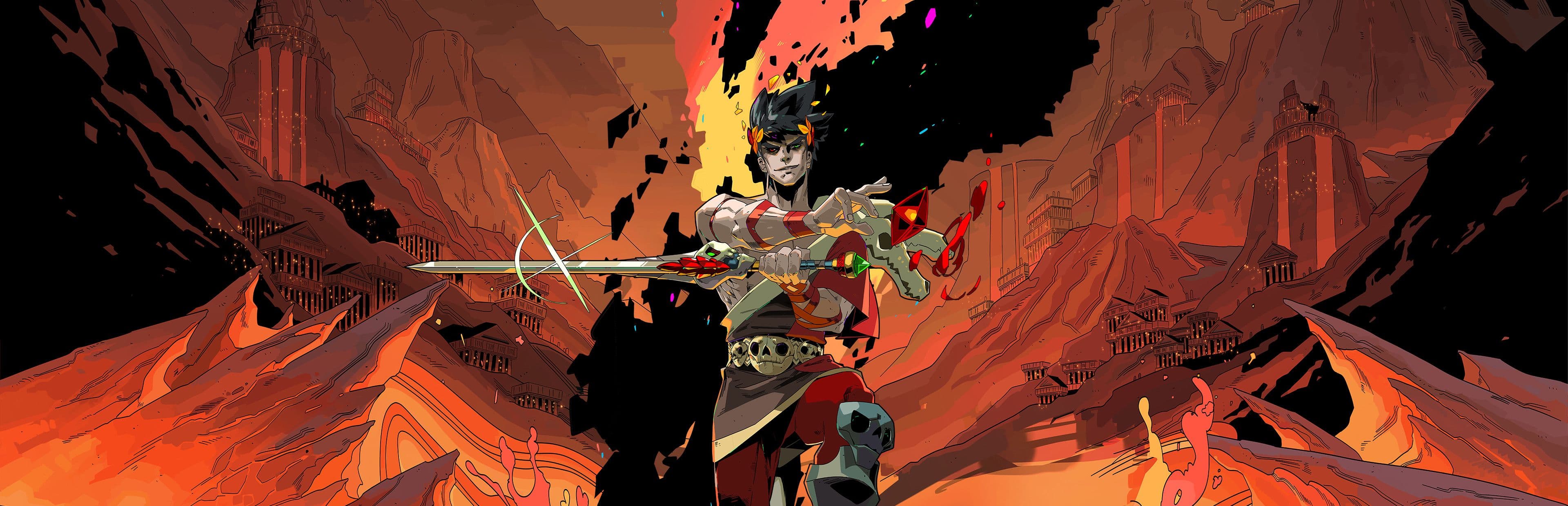
Zagreus, the prince of the Underworld, wants out. His father Hades refuses to let him leave, so Zagreus fights his way up through Tartarus, Asphodel and Elysium towards the surface — and every time he dies, he wakes up in a pool of blood back in his father's house.
Death is progress
In most roguelikes, dying means starting again from nothing. In Hades, it means going home. Characters react to how you died, new conversations unlock, relationships deepen and you spend resources on permanent upgrades. The story literally cannot move forward without you failing.
Gifts from Olympus
The Olympian gods want Zagreus to succeed, so they offer him boons: Zeus adds chain lightning, Poseidon knocks enemies into walls, Dionysus poisons them with wine. Combined with six very different Infernal Arms, every run builds into something new. Combat is fast, readable and incredibly responsive.
Art, music and voices
Jen Zee's character art makes every god instantly memorable, Darren Korb's soundtrack mixes heavy guitars with Mediterranean folk, and almost every line is voiced. Supergiant wrote so much dialogue that players still hear new lines after a hundred escapes.
Celebrated everywhere
Developed in early access and released fully in September 2020, Hades became the first video game to win a Hugo Award. Its sequel, Hades II, launched in full in 2025 — but the original is still the perfect place to start.